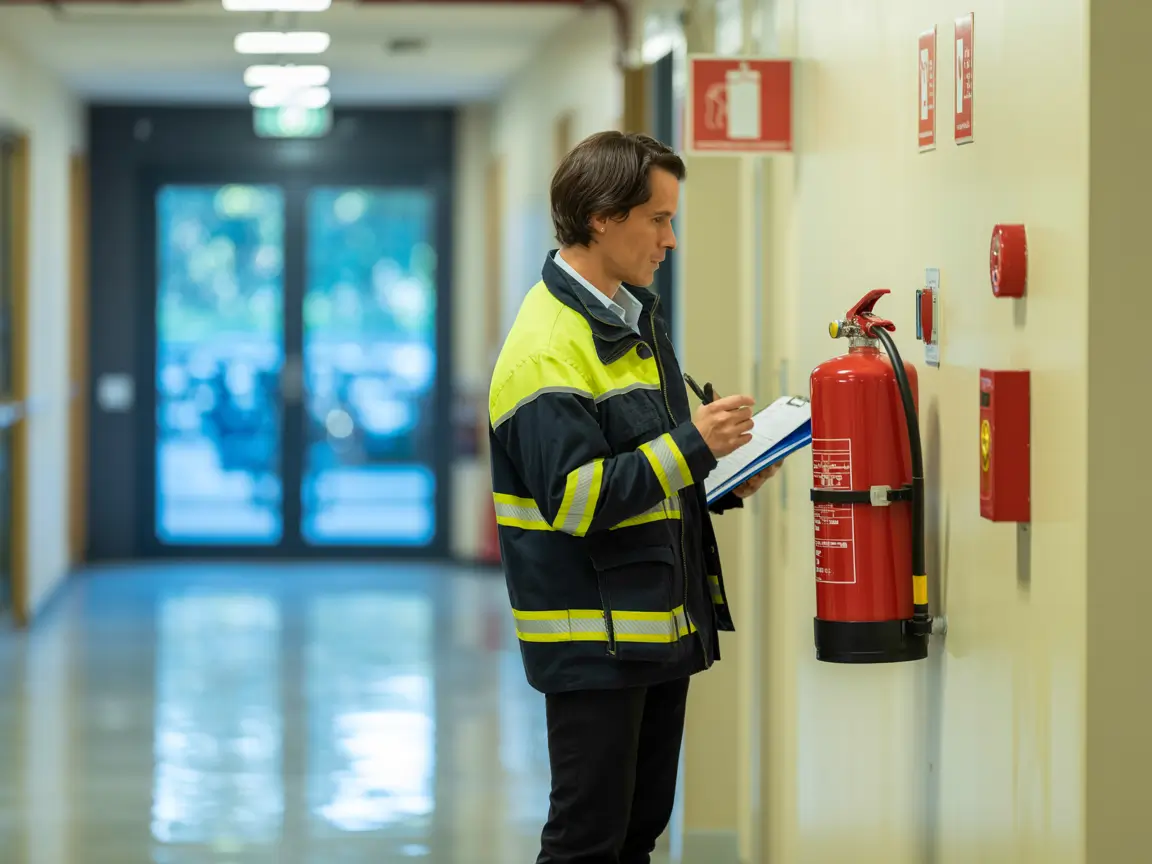
Fire safety is not a box to tick. The right partner will help you prevent incidents, meet the law, and keep people and property safe. Use this guide to choose a competent, local company you can trust.
Why your choice matters
- Legal duties under the Fire Safety Order apply to most non-domestic premises.
- Poor design or missed maintenance can void insurance and increase risk.
- A good provider gives clear advice, fair pricing, and fast call-outs.
Core services a competent provider should offer
- Fire risk assessments: suitable and sufficient, with a prioritised action plan.
- Detection and alarms: design, installation, commissioning, and routine testing.
- Emergency lighting: design and periodic inspection.
- Portable extinguishers: supply, commissioning, staff training, and annual servicing.
- Passive fire protection: fire doors, intumescent seals, and fire stopping with photographic evidence.
- Planned maintenance: scheduled visits, asset registers, and digital service reports.
Accreditations and proof to check
- Third-party certification: look for BAFE scheme registration relevant to the service, for example SP101 for extinguishers or SP203-1 for fire detection and alarm systems.
- UKAS: the certification body should be accredited by UKAS. Ask for the certificate and scope.
- Competence: trade cards or training records for engineers, plus manufacturer approvals for the systems they install.
- Insurance: public and employers’ liability with adequate limits. Ask for a copy.
Questions to ask before you hire
- Can you share recent Hertfordshire references for a site like mine?
- Which BAFE schemes and standards does your work follow?
- What is included in design, commissioning, and handover documentation?
- How do you handle emergency call-outs and parts availability?
- Do you provide an asset list with locations, serials, and service history?
- How do you evidence passive fire works, for example labelled penetrations and photo logs?
- What happens if a fault appears within the warranty period?
Typical process for new systems
- Survey: site walk-through and review of any drawings or existing reports.
- Design and quote: a clear proposal with device counts, cable routes, and standards cited.
- Installation: competent engineers, neat containment, and safe isolation procedures.
- Commissioning: cause and effect testing, zone charts, as-fitted drawings, and user training.
- Handover: manuals, certificates, log book, and a maintenance schedule.
Service and maintenance expectations
- Fire alarms: routine inspection at the frequency your risk assessment sets, often quarterly or six-monthly, with weekly user tests recorded in the log book.
- Emergency lighting: monthly functional tests by the user and an annual full-duration test by a competent person.
- Extinguishers: annual service, plus extended service or replacement in line with the manufacturer’s guidance.
- Fire doors and passive protection: periodic inspections, early repair of damage, and clear records of works.
Cost pointers
- Quotes should itemise design, installation, commissioning, training, and maintenance.
- Avoid rock-bottom prices that remove testing or documentation. Cheap installs often cost more to fix later.
- Ask for a fixed annual service plan with call-out terms in writing.
Red flags to avoid
- No third-party certification or expired certificates.
- Vague proposals with no device count, drawings, or standards referenced.
- Cash-only offers, no asset register, or refusal to provide test results.
- Hard selling of unnecessary kit instead of following the risk assessment.
Local advantage in Hertfordshire
A local company can reach you faster, understands council and landlord requirements, and can coordinate with nearby trades. Ask if they cover your area regularly and keep common spares on their vans.
How to compare quotes fairly
- Create a short scope: areas covered, performance needs, and any existing kit to reuse.
- Ask at least two BAFE-registered firms to quote against the same scope.
- Score on competence, documentation quality, response times, and total cost of ownership, not price alone.
Simple checklist
- BAFE registration and UKAS-backed certification verified.
- Clear, itemised proposal that cites the right standards.
- References from similar Hertfordshire sites.
- Asset register, drawings, certificates, and log books provided at handover.
- Planned maintenance schedule with response times agreed.
Next step: shortlist two or three certified providers, request a site survey, and choose the team that explains things clearly and backs claims with evidence.