Fire Protection for Business
July 16, 2026
Fire Risk Assessment: What Every Business Needs to Know
4mins
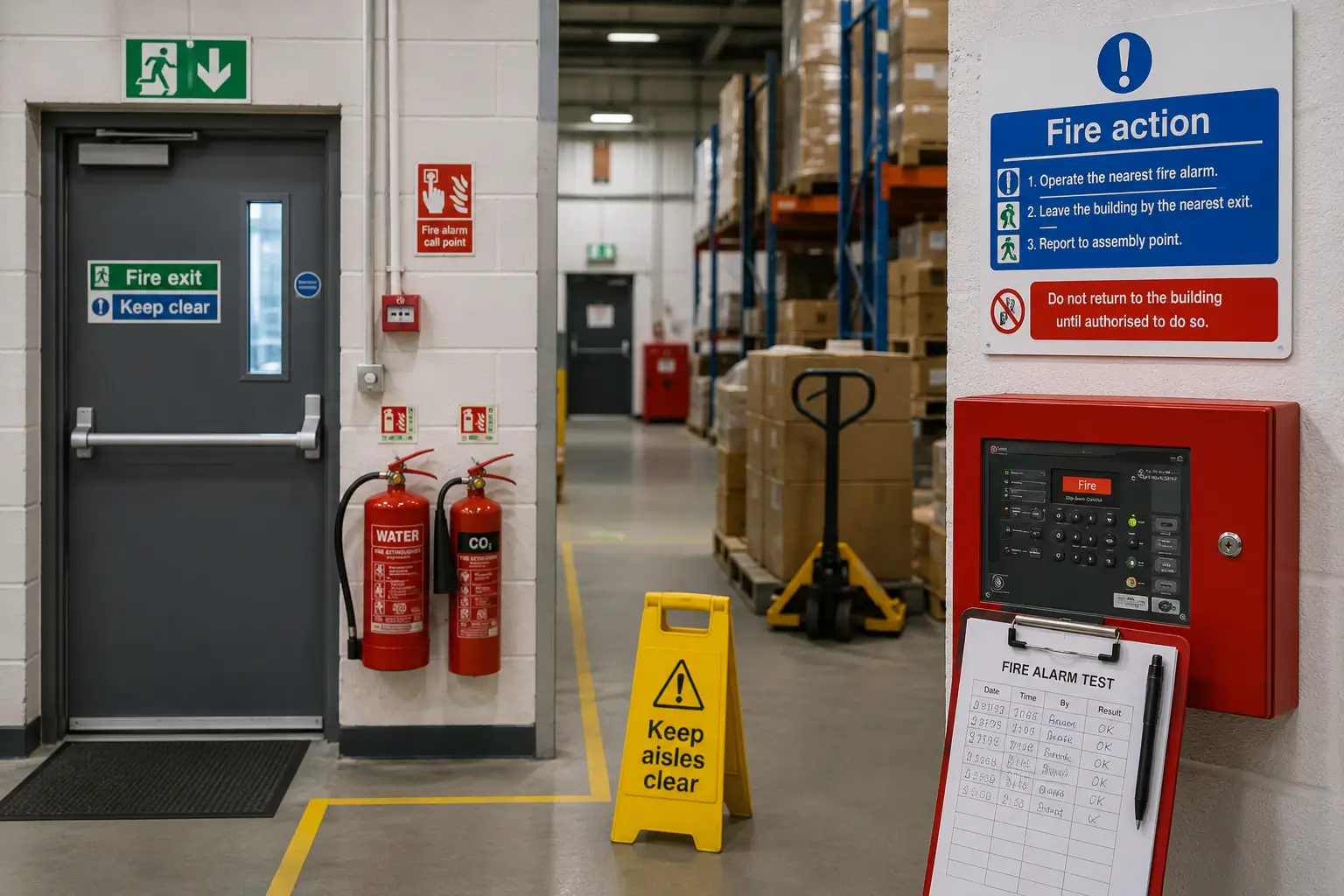
Fire safety mistakes are often simple, everyday issues that build up over time. A blocked exit, missed alarm test, damaged fire door, or outdated risk assessment may not seem urgent, but each one can increase risk and create problems during an inspection or emergency.
This article explains the most common fire safety mistakes businesses make and how to avoid them.
One of the biggest mistakes is treating fire safety as something to sort once and then forget.
A business may arrange a fire risk assessment, fit extinguishers, add signs, and assume everything is covered. The problem is that workplaces change. Staff numbers increase, furniture moves, equipment is added, and storage areas fill up.
Fire safety should be reviewed regularly, especially after:
Blocked escape routes are a common issue in workplaces, warehouses, shops, offices, and shared buildings.
Boxes, bins, furniture, deliveries, and cleaning equipment can quickly end up in corridors or beside fire exits. During a fire, this can delay evacuation and put people at risk.
A fire alarm system only protects people if it works properly.
Some businesses have alarms fitted but do not test them often enough. Others carry out tests but fail to record them. If there is no clear testing routine, faults can go unnoticed.
Fire alarm testing should record:
Fire doors are designed to slow the spread of fire and smoke. They help protect escape routes and give people more time to leave safely.
Common fire door mistakes include:
Different fire extinguishers are designed for different fire risks. Using the wrong type can be ineffective and, in some cases, dangerous.
Businesses should make sure extinguishers are:
Fire safety signs guide people quickly in an emergency.
Problems often happen when signs are missing, damaged, blocked, or no longer match the building layout. This can cause confusion, especially for visitors, contractors, and new staff.
Signs should clearly show:
Fire safety equipment and procedures are only useful if people know what to do.
Staff should understand:
Many businesses focus on permanent staff but forget about others who may be on site.
This can include:
Your fire safety arrangements should consider everyone who may be affected by a fire, not only the people who work there every day.
Flammable materials must be stored carefully. This includes cleaning products, aerosols, packaging, paper, fuel, paints, and certain chemicals.
Common storage mistakes include:
Fire safety records help prove that checks, servicing, training, and maintenance are being carried out.
Important records include:
Most fire safety mistakes can be avoided with a simple routine.
A good approach is to:
Fire safety does not need to be complicated, but it does need regular attention. The businesses that run into problems are often the ones that let small issues build up until they become serious.
By keeping routes clear, maintaining equipment, training staff, and reviewing risks, you can create a safer workplace and reduce the chance of enforcement action, disruption, or fire damage.
Meta title: Common Fire Safety Mistakes Businesses Make
Meta description: Learn the most common fire safety mistakes businesses make, from blocked exits to poor staff training, and how to reduce risk in your workplace.
Suggested URL slug: common-fire-safety-mistakes-businesses-make

Copyright © 2026. Essential Fire Protection. All rights reserved.