Fire Protection for Business
June 4, 2026
The Most Common Fire Safety Mistakes Businesses Make
6mins
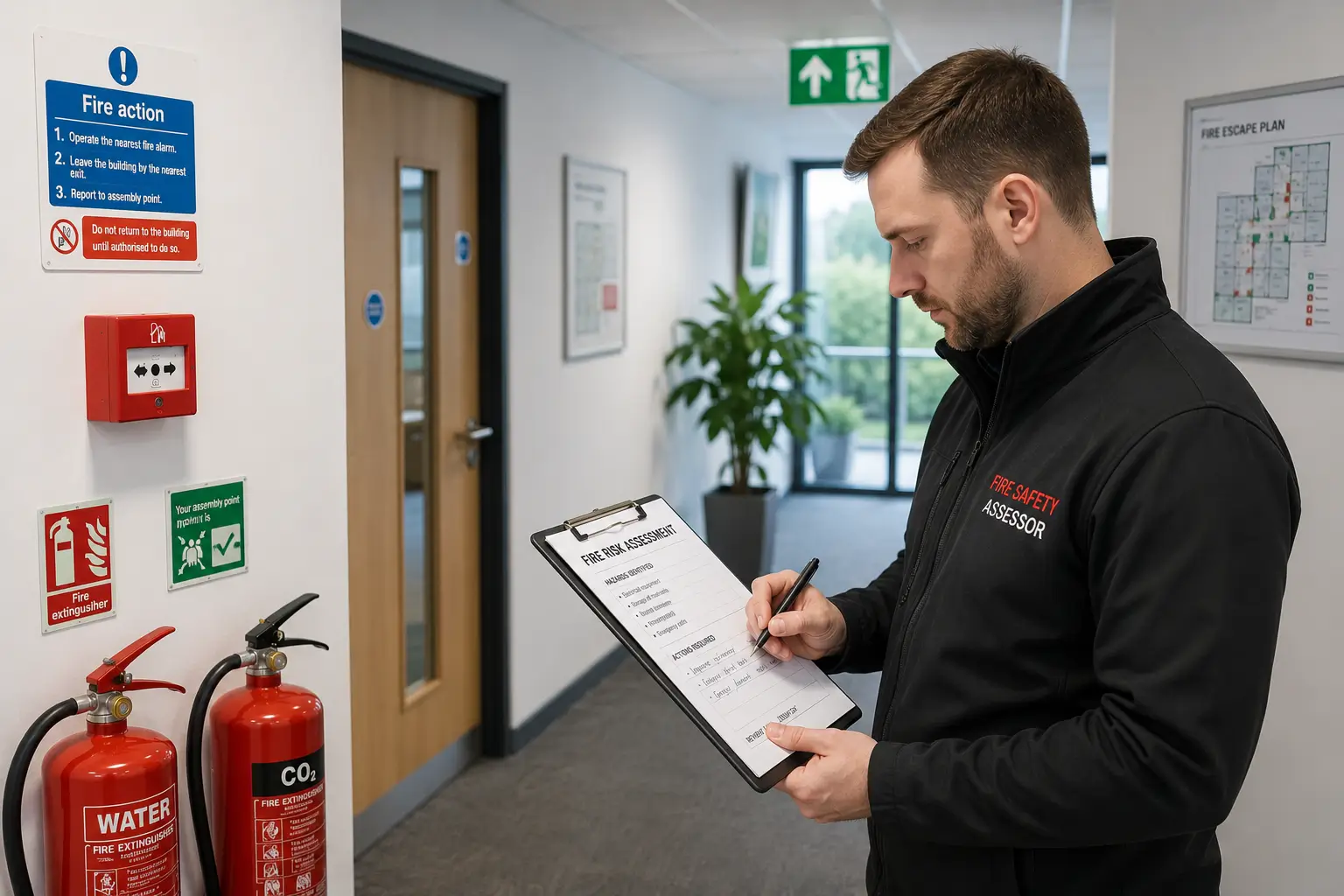
A fire risk assessment is a legal requirement for most workplaces and non-domestic premises in England and Wales. It helps identify how a fire could start, who may be at risk, and what action is needed to protect people.
This guide explains who is responsible for completing a fire risk assessment, what it should cover, when it must be reviewed, and why keeping an accurate written record matters.
A fire risk assessment is a structured review of a building, the activities carried out inside it, and the fire safety arrangements already in place.
Its purpose is to identify:
The assessment should focus on protecting life. It should also help the business reduce the chance of a fire starting and limit the harm caused if one does occur.
Most businesses and organisations operating from non-domestic premises need a fire risk assessment.
This includes:
The rules do not usually apply to the private areas of a single domestic home. Different duties may apply where a property contains shared or communal areas, is used as rented accommodation, or is partly used for business.
The law places fire safety duties on the Responsible Person.
Depending on the premises, this may be:
There may be more than one Responsible Person in a shared building. For example, a landlord may control the communal areas while individual business tenants control their own units.
Where responsibilities overlap, everyone involved should cooperate, share relevant fire safety information, and coordinate their arrangements.
A Responsible Person may complete the assessment if they have enough knowledge, training, and experience to do the work properly.
Government guidance provides a five-step checklist for simple premises. A small, low-risk office may be easier to assess than a large warehouse, care setting, factory, hotel, or building with sleeping accommodation.
You should consider using a competent fire risk assessor where:
Hiring an assessor does not remove the legal responsibility from the Responsible Person. The person in control of the premises must still make sure the assessment is suitable, sufficient, recorded, and acted upon.
The first step is to look for anything that could start or support a fire.
Common ignition sources include:
You should also identify materials that could burn, including paper, cardboard, packaging, furniture, waste, cleaning products, aerosols, fuel, and chemicals.
The assessment should consider everyone who may be inside or near the premises.
This includes:
Extra planning may be needed for anyone who could have difficulty hearing an alarm, understanding instructions, or leaving the building without support.
Once the hazards and people at risk have been identified, the next step is to decide whether the existing precautions are adequate.
Possible improvements may include:
Any required work should be recorded and given a sensible deadline. Higher-risk problems should be dealt with first.
The fire risk assessment must be recorded in full. The written record should explain what was checked, what hazards were found, who may be at risk, and what action is required.
The business should also have an emergency plan covering:
Staff should receive suitable information and training. Fire drills should be carried out so employees understand what to do during an emergency.
A fire risk assessment should remain accurate and reflect the current use of the premises.
It should be reviewed after:
A review does not always mean replacing the entire document. It means checking the assessment, recording any changes, and updating the action plan where needed.
UK fire safety law does not set one fixed review period for every type of premises. The assessment must be reviewed regularly and whenever there is reason to believe it is no longer valid.
Many businesses choose to carry out a planned review each year. Higher-risk premises may need checks more often. The right schedule depends on the building, its use, the people present, and the hazards involved.
Regular internal checks should continue between formal reviews. Escape routes, fire doors, alarms, signs, extinguishers, and emergency lighting should not be ignored until the next assessment date.
A clear fire risk assessment record should include:
The document should be specific to the premises. A copied template containing vague statements is unlikely to provide an accurate account of the risks in your building.
Local fire and rescue authorities can inspect business premises and review fire safety arrangements.
Where problems are found, the authority may provide advice or take formal action. This can include:
Poor fire safety can also cause business interruption, insurance difficulties, damage to property, and risk to staff and visitors.
Problems often arise because an assessment has been completed but not managed properly.
Common mistakes include:
The assessment only protects people when its findings lead to practical action.
A professional fire risk assessment can help you understand the hazards within your premises and the work needed to meet your fire safety duties.
It can also provide a clear written action plan covering escape routes, fire alarms, emergency lighting, fire doors, extinguishers, staff procedures, and record keeping.
If your current assessment is missing, out of date, or no longer reflects how your building is used, arrange a review before small problems become more serious.

Copyright © 2026. Essential Fire Protection. All rights reserved.