Fire Protection for Business
September 24, 2026
Why Choosing a Local Fire Protection Company Makes Sense
4mins
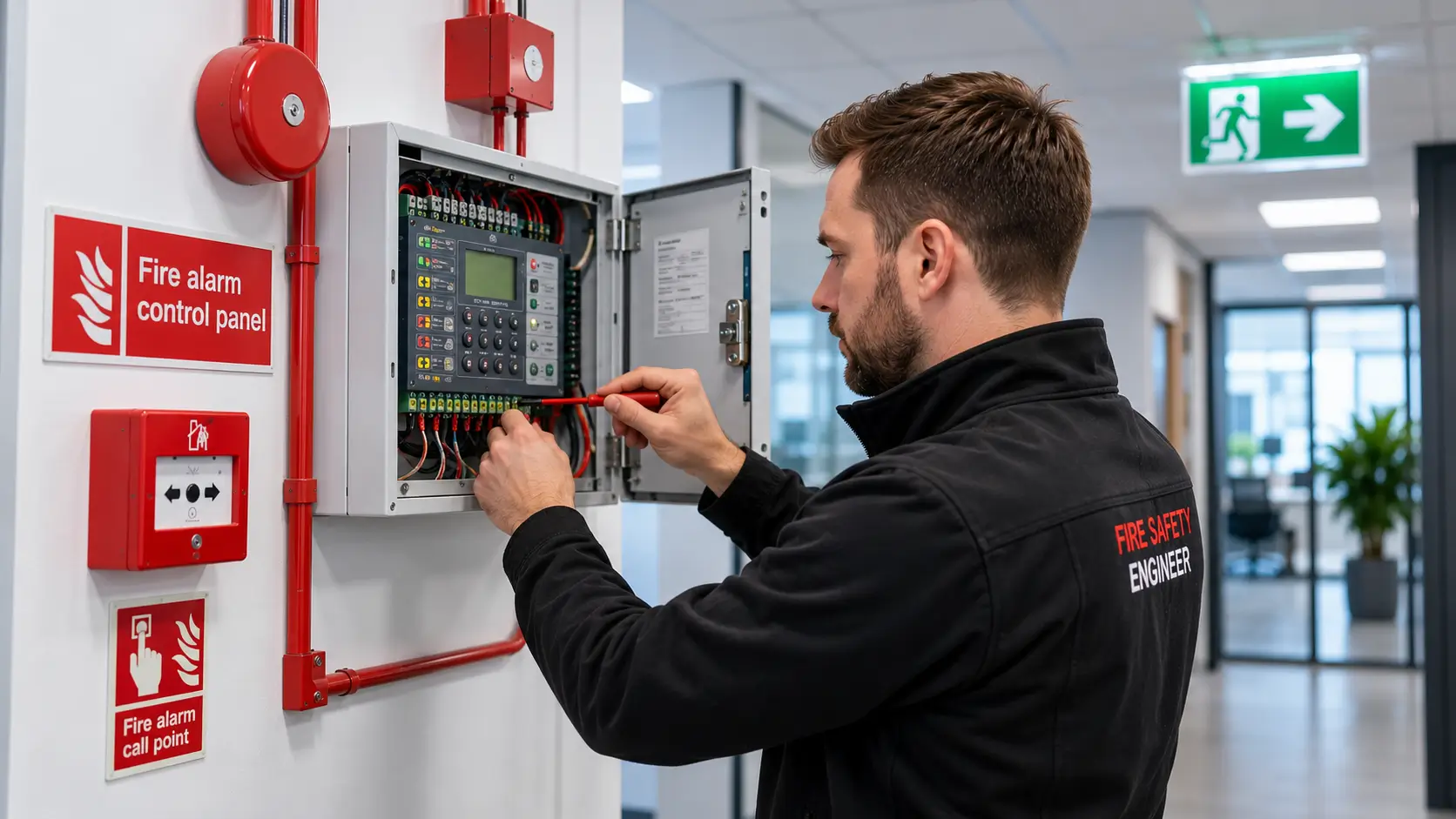
Emergency lighting helps people find their way out of a building if the normal lighting fails. During a fire, power cut or other emergency, clearly illuminated escape routes can help people leave the premises safely.
Regular emergency lighting testing helps businesses find failed lamps, batteries and other faults before an emergency occurs. This guide explains what emergency lighting does, why testing matters and what businesses should check.
Emergency lighting is designed to operate when the normal lighting supply fails.
Depending on the building, it may be used to illuminate:
The emergency lighting arrangements required for a building should be considered as part of its fire risk assessment.
Normal electrical lighting cannot be relied upon during every emergency.
A fire can damage electrical systems, while a power failure can leave parts of a building in darkness even when there is no fire.
Without suitable emergency lighting, people may struggle to see stairs, obstacles, changes in direction or exit doors.
This becomes particularly important in premises without much natural light, buildings occupied after dark and unfamiliar environments used by members of the public.
The requirements depend on the premises and should be considered during the fire risk assessment.
Factors include:
Emergency lighting should support safe evacuation if the normal lighting supply is lost.
An emergency light can look perfectly normal while the mains electricity is working. The problem may only become apparent when the normal supply fails and the fitting needs to operate from its backup power source.
Regular testing helps identify:
Faults should be recorded and repaired as soon as practicable.
Government guidance recommends monthly testing of emergency lighting systems.
The purpose is to check that the emergency lights operate when the normal lighting supply is interrupted.
The test should be carried out at a suitable time so that the emergency lighting has an opportunity to recharge afterwards and is available when the building is occupied.
Results should be recorded in the business’s fire safety records.
Emergency lighting should also receive more detailed periodic testing and maintenance by a competent person.
This allows the system to be checked beyond the short functional test carried out during routine monthly checks.
Any problems identified should be dealt with promptly rather than being left until the next test.
Several problems can reduce the effectiveness of an emergency lighting system.
These include:
Regular checks make these problems easier to identify before the system is needed during an emergency.
Keeping a record of testing and maintenance provides a clear history of the system.
Records can include:
These records can also be reviewed alongside the fire risk assessment and other fire safety documentation.
Emergency lighting should not be considered separately from the rest of the building’s fire precautions.
A fire risk assessment should consider whether people can find and use escape routes safely. That includes considering the lighting available if normal power is lost.
If the building layout changes, the emergency lighting arrangements should be checked again. Moving a wall, changing a corridor or creating a new room could affect how well existing fittings illuminate the route.
Some routine checks may be completed by a suitably instructed person within the business.
More detailed testing, maintenance and repairs should be completed by someone with the appropriate knowledge and ability to work on the system.
If you are unsure whether your emergency lighting is suitable or when it was last professionally tested, arranging an inspection can identify any areas that require attention.
Emergency lighting is easy to overlook because it spends most of its time in standby mode. Its real purpose becomes apparent when the normal lighting fails.
Regular emergency lighting testing gives businesses confidence that escape routes, stairs, exits and other important areas will remain visible if the normal power supply is lost.

Copyright © 2026. Essential Fire Protection. All rights reserved.