Fire Protection for Business
October 15, 2026
Emergency Lighting Testing: A Guide for UK Businesses
5mins
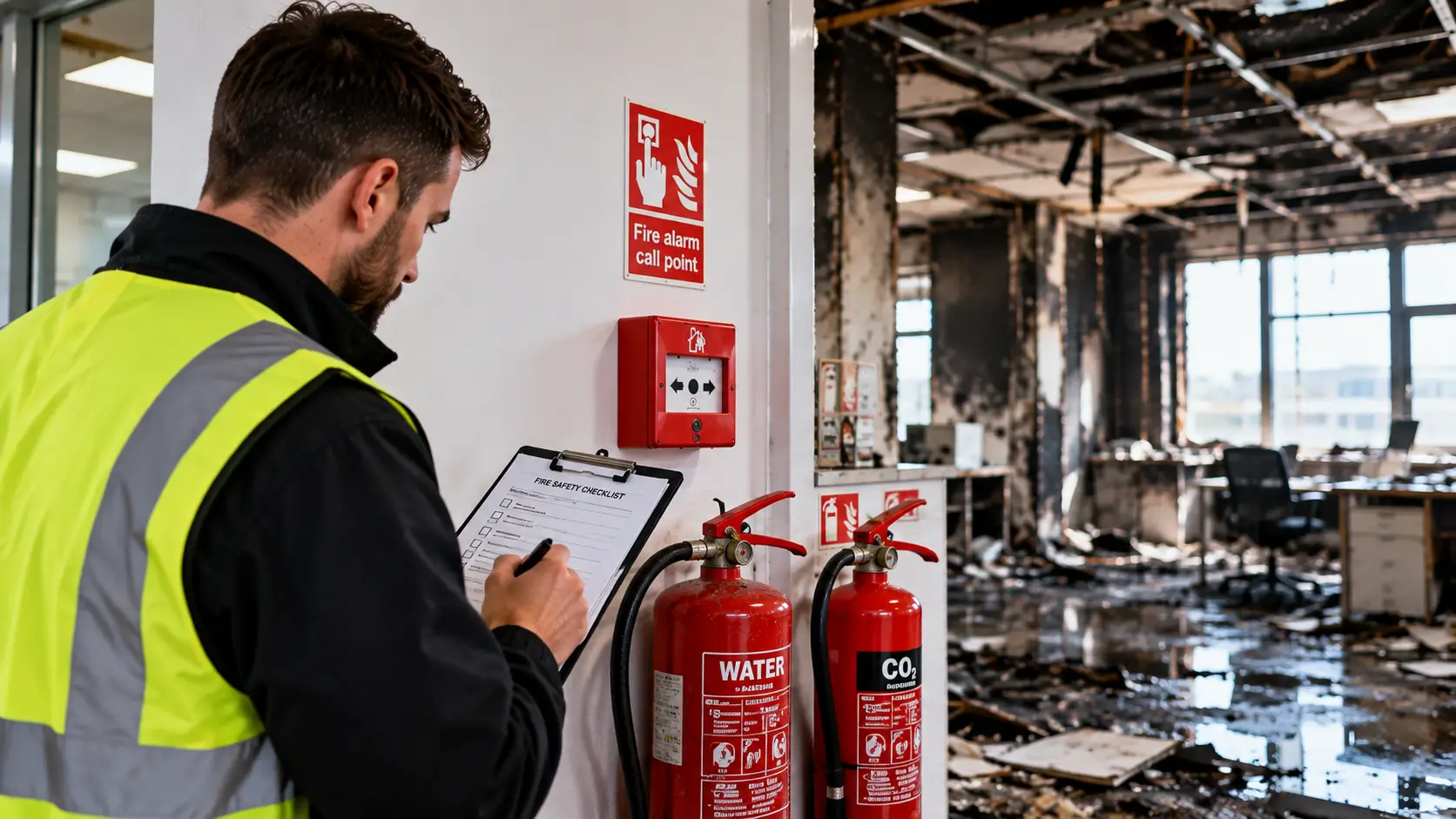
Keeping your fire protection up to date is an ongoing responsibility. Fire alarms, extinguishers, emergency lighting, fire doors and fire risk assessments all need attention over time to make sure they remain suitable for your premises.
Failing to maintain your fire protection can put people at risk, but there are also serious consequences for the business itself. Enforcement action, disruption, repair costs and insurance problems can all follow when fire safety is allowed to fall behind.
Outdated fire protection does not necessarily mean equipment is visibly old. A system can appear to be in good condition while no longer providing the protection the premises require.
Examples include:
These problems can develop gradually, particularly in busy workplaces where fire safety checks are pushed down the list of priorities.
A fire risk assessment is not something that should be completed and then forgotten.
Under the Regulatory Reform (Fire Safety) Order 2005, the Responsible Person must make sure a suitable and sufficient fire risk assessment is carried out. It must also be reviewed regularly and when there is reason to believe it is no longer valid or there has been a change that affects fire safety.
Changes can include:
An assessment completed several years ago may bear little resemblance to the way the premises are being used today.
Fire protection equipment spends much of its life waiting to be used. This makes routine testing and maintenance particularly important.
A fire alarm may develop a fault. An emergency light battery can deteriorate. A fire extinguisher may become damaged or lose pressure. A fire door closer can stop operating correctly.
Some faults are obvious, while others may only be discovered during testing or servicing.
Regular maintenance gives businesses the opportunity to find these problems before the equipment is needed during an emergency.
Fire and rescue authorities are responsible for enforcing fire safety legislation in most non-domestic premises in England and Wales.
If an inspection identifies problems, action can range from advice through to formal enforcement.
Depending on the circumstances, this can include:
A prohibition notice can have an immediate financial impact if areas of a building cannot be used until safety problems have been addressed.
Serious breaches of fire safety law can lead to prosecution.
Minor offences can result in fines, while more serious cases heard in the Crown Court can result in unlimited fines. Individuals can also face imprisonment for certain offences.
The financial impact does not necessarily end with the penalty. A business may also face legal costs, remedial work and lost income while problems are corrected.
Businesses should understand the fire safety conditions attached to their insurance policies.
An insurer may expect specified precautions, maintenance or security measures to be followed. The exact conditions differ between policies, so businesses should check their own documents rather than make assumptions about their cover.
If a fire occurs, insurers may investigate the circumstances surrounding the loss and whether relevant policy conditions were met.
Keeping maintenance records, servicing documentation and an up-to-date fire risk assessment provides evidence of how fire safety has been managed.
The direct cost of replacing damaged property is only one part of the financial impact of a fire.
A business may also experience:
Even a relatively small fire can affect an area of a building for days or weeks through smoke, water damage and the work required to make the premises safe again.
The most serious consequence is the increased risk to employees, customers, contractors and visitors.
Fire protection measures work together. Detection provides warning, escape routes provide a way out, emergency lighting helps people see those routes and fire doors help limit the spread of fire and smoke.
If one or more of these measures fails, people may have less time to leave safely.
It may be time to review your arrangements if:
These are issues that should be investigated rather than left until the next inspection.
Maintaining fire protection requires time and money, but dealing with a serious fire or enforcement action can be far more expensive.
A sensible approach is to keep a clear maintenance schedule covering your fire alarm, extinguishers, emergency lighting, fire doors and other equipment. Your fire risk assessment should also be reviewed so it continues to reflect the premises.
If you are unsure whether your fire protection is up to date, arranging a professional review can identify areas that need attention and give you a clear plan for dealing with them.

Copyright © 2026. Essential Fire Protection. All rights reserved.